Ramtin and the Panic About Tomorrow
The hallway was too loud. Ramtin walked through the crowded school corridor, his backpack thumping against his back like it had its own heavy thoughts inside. Posters shouted from the walls: YOUR FUTURE – DEINE ZUKUNFT
Universities. Training programs. Jobs with long English names. Groups of students stood around, pointing at the posters, talking fast. Some laughed, some argued about which job made more money, which city was cooler, which university was harder to get into. Ramtin kept his eyes on the floor. His thoughts started spinning, like they sometimes did when everything felt too big. What if I never become anyone? What if my German stays like this? What if everyone else finds a path and I don’t?
The noise of the corridor faded into the background. For a moment, he heard only his own heartbeat and his own questions. The strap of his backpack cut into his shoulder. Maybe it’s not just heavy because of books, he thought. Maybe it’s heavy because of everything I’m afraid I’ll never be. He moved past the poster and tried to breathe normally, as if nothing was wrong.
Ramtin and the Panic About Tomorrow
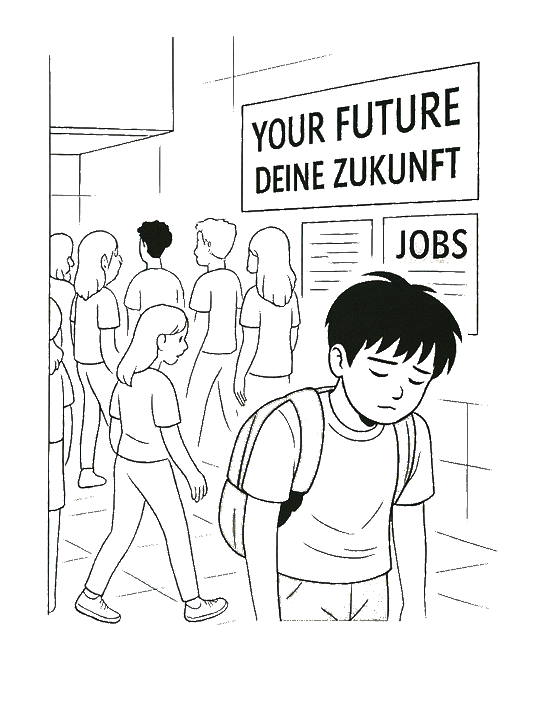
The hallway was too loud. Ramtin walked through the crowded school corridor, his backpack thumping against his back like it had its own heavy thoughts inside. Posters shouted from the walls: YOUR FUTURE – DEINE ZUKUNFT
Universities. Training programs. Jobs with long English names. Groups of students stood around, pointing at the posters, talking fast. Some laughed, some argued about which job made more money, which city was cooler, which university was harder to get into. Ramtin kept his eyes on the floor. His thoughts started spinning, like they sometimes did when everything felt too big. What if I never become anyone? What if my German stays like this? What if everyone else finds a path and I don’t?
The noise of the corridor faded into the background. For a moment, he heard only his own heartbeat and his own questions. The strap of his backpack cut into his shoulder. Maybe it’s not just heavy because of books, he thought. Maybe it’s heavy because of everything I’m afraid I’ll never be. He moved past the poster and tried to breathe normally, as if nothing was wrong.
Ramtin and the Panic About Tomorrow
That evening, the kitchen smelled like fried potatoes and turmeric. Mama moved between the stove and the table, tired but calm. The TV murmured softly in the living room. On the table, a small stack of letters waited – bills, official forms, things that always seemed to say “urgent” or “important”. Baba came home late. He closed the door, took off his shoes with a sigh, and dropped into his chair. “Viel Arbeit, wenig Geld,” he said with a small, tired smile. A lot of work, little money. They switched between German and Persian the way they always did, weaving the two languages together like threads. “So,” Baba said, putting some food on his plate. “How was school, Ramtin? Did you learn something useful for your future?” There it was again. That word. Future.
Ramtin shrugged. “We had a career day. They talked about jobs. About applications. It was… a lot.” “Germany has many possibilities,” Baba said. “You can choose what you want to become. But you must study well, okay? Then you will have a secure future. Better than in Iran.” He meant it lovingly. That made it harder, not easier. The word future pressed on Ramtin’s chest like an invisible hand. But he didn’t want them to worry. He forced a small smile. “Yeah. I’ll try.” Later, in his room, he lay on his bed and stared at the ceiling. Germany and Iran flickered in his mind like two TV channels playing at the same time. Both were familiar. Both confusing. What does “possibilities” even mean, he thought, when I don’t even know who I want to be?
Ramtin and the Panic About Tomorrow
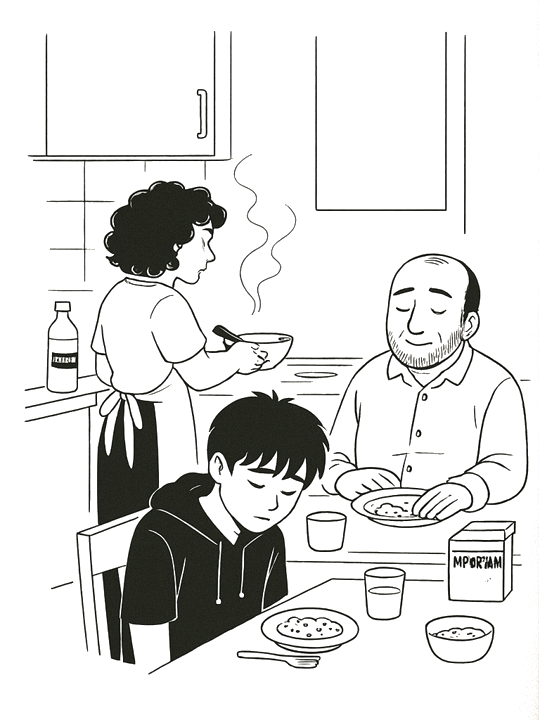
That evening, the kitchen smelled like fried potatoes and turmeric. Mama moved between the stove and the table, tired but calm. The TV murmured softly in the living room. On the table, a small stack of letters waited – bills, official forms, things that always seemed to say “urgent” or “important”. Baba came home late. He closed the door, took off his shoes with a sigh, and dropped into his chair. “Viel Arbeit, wenig Geld,” he said with a small, tired smile. A lot of work, little money. They switched between German and Persian the way they always did, weaving the two languages together like threads. “So,” Baba said, putting some food on his plate. “How was school, Ramtin? Did you learn something useful for your future?” There it was again. That word. Future.
Ramtin shrugged. “We had a career day. They talked about jobs. About applications. It was… a lot.” “Germany has many possibilities,” Baba said. “You can choose what you want to become. But you must study well, okay? Then you will have a secure future. Better than in Iran.” He meant it lovingly. That made it harder, not easier. The word future pressed on Ramtin’s chest like an invisible hand. But he didn’t want them to worry. He forced a small smile. “Yeah. I’ll try.” Later, in his room, he lay on his bed and stared at the ceiling. Germany and Iran flickered in his mind like two TV channels playing at the same time. Both were familiar. Both confusing. What does “possibilities” even mean, he thought, when I don’t even know who I want to be?
Ramtin and the Panic About Tomorrow
Back in Iran, the sun had felt sharper. Ramtin remembered the balcony with the dusty plants, the smell of tea, the constant honking of cars down on the street. Voices of adults had floated in from the kitchen:
“No jobs, even for people with degrees.”
“Prices are going up again.”
“Everyone wants to leave. There is no future here.”
He hadn’t understood all the words – inflation, sanctions, unemployment – but he had understood the feeling in the room: heavy, stuck, hopeless. The future had often felt like a closed door.
Then, one day, he heard his parents whispering “Germany” in the night. Their voices were full of fear and hope at the same time. Germany sounded like a door opening.
Now they were here, in this cold country with neat streets and long forms and so many possibilities people got dizzy from them. But sometimes his chest still felt tight, as if the old hopelessness had packed itself into a suitcase and travelled with them.
Ramtin and the Panic About Tomorrow
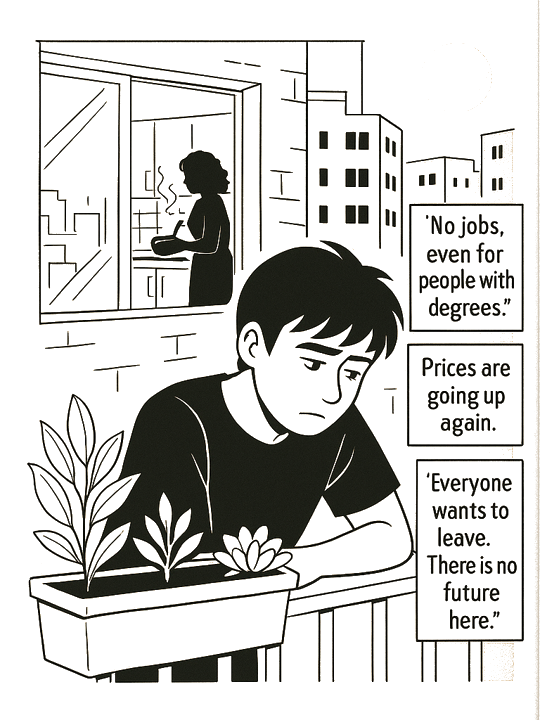
Back in Iran, the sun had felt sharper. Ramtin remembered the balcony with the dusty plants, the smell of tea, the constant honking of cars down on the street. Voices of adults had floated in from the kitchen:
“No jobs, even for people with degrees.”
“Prices are going up again.”
“Everyone wants to leave. There is no future here.”
He hadn’t understood all the words – inflation, sanctions, unemployment – but he had understood the feeling in the room: heavy, stuck, hopeless. The future had often felt like a closed door.
Then, one day, he heard his parents whispering “Germany” in the night. Their voices were full of fear and hope at the same time. Germany sounded like a door opening.
Now they were here, in this cold country with neat streets and long forms and so many possibilities people got dizzy from them. But sometimes his chest still felt tight, as if the old hopelessness had packed itself into a suitcase and travelled with them.
Ramtin and the Panic About Tomorrow
The hallway was too loud. Ramtin walked through the crowded school corridor, his backpack thumping against his back like it had its own heavy thoughts inside. Posters shouted from the walls: YOUR FUTURE – DEINE ZUKUNFT
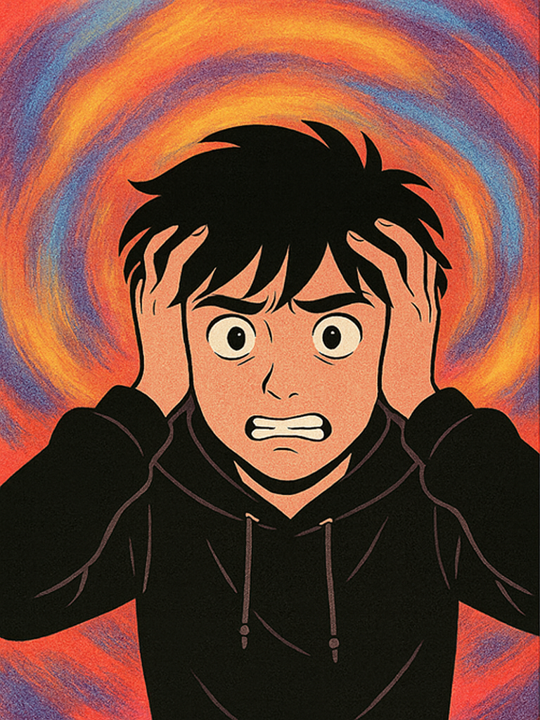
Universities. Training programs. Jobs with long English names. Groups of students stood around, pointing at the posters, talking fast. Some laughed, some argued about which job made more money, which city was cooler, which university was harder to get into. Ramtin kept his eyes on the floor. His thoughts started spinning, like they sometimes did when everything felt too big. What if I never become anyone? What if my German stays like this? What if everyone else finds a path and I don’t?
The noise of the corridor faded into the background. For a moment, he heard only his own heartbeat and his own questions. The strap of his backpack cut into his shoulder. Maybe it’s not just heavy because of books, he thought. Maybe it’s heavy because of everything I’m afraid I’ll never be. He moved past the poster and tried to breathe normally, as if nothing was wrong.
Ramtin and the Panic About Tomorrow
The hallway was too loud. Ramtin walked through the crowded school corridor, his backpack thumping against his back like it had its own heavy thoughts inside. Posters shouted from the walls: YOUR FUTURE – DEINE ZUKUNFT
Universities. Training programs. Jobs with long English names. Groups of students stood around, pointing at the posters, talking fast. Some laughed, some argued about which job made more money, which city was cooler, which university was harder to get into. Ramtin kept his eyes on the floor. His thoughts started spinning, like they sometimes did when everything felt too big. What if I never become anyone? What if my German stays like this? What if everyone else finds a path and I don’t?
The noise of the corridor faded into the background. For a moment, he heard only his own heartbeat and his own questions. The strap of his backpack cut into his shoulder. Maybe it’s not just heavy because of books, he thought. Maybe it’s heavy because of everything I’m afraid I’ll never be. He moved past the poster and tried to breathe normally, as if nothing was wrong.
Ramtin and the Panic About Tomorrow
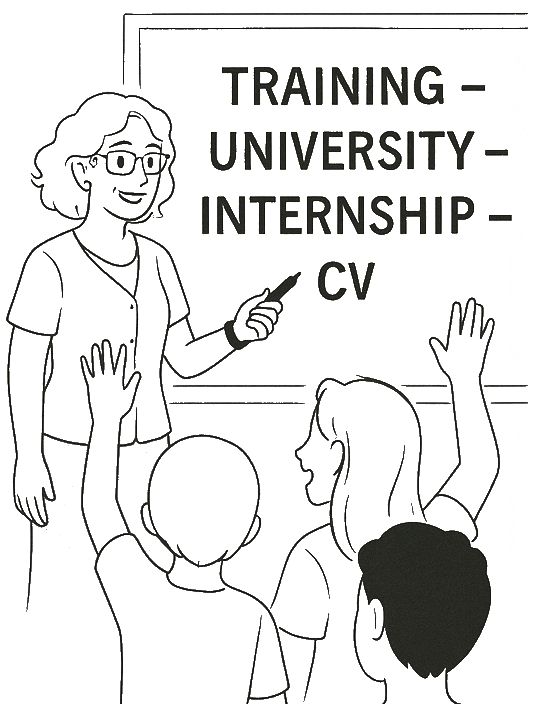
His face became hot. His tongue felt too big in his mouth. “I… I don’t know yet,” he said quietly. “I think I need more time.” Some students whispered, but not in a mean way – just curious. It still made him want to disappear. “You have time,” Ms. Meier said gently. “We will explore this together over the next months, okay? You don’t have to know everything today.” Her voice was kind. But inside him, another voice whispered: You’re behind. Everyone else already has a plan.
Ramtin and the Panic About Tomorrow
His face became hot. His tongue felt too big in his mouth. “I… I don’t know yet,” he said quietly. “I think I need more time.” Some students whispered, but not in a mean way – just curious. It still made him want to disappear. “You have time,” Ms. Meier said gently. “We will explore this together over the next months, okay? You don’t have to know everything today.” Her voice was kind. But inside him, another voice whispered: You’re behind. Everyone else already has a plan.
Ramtin and the Panic About Tomorrow
That night, he couldn’t sleep. The questions about the future came back, harder this time.
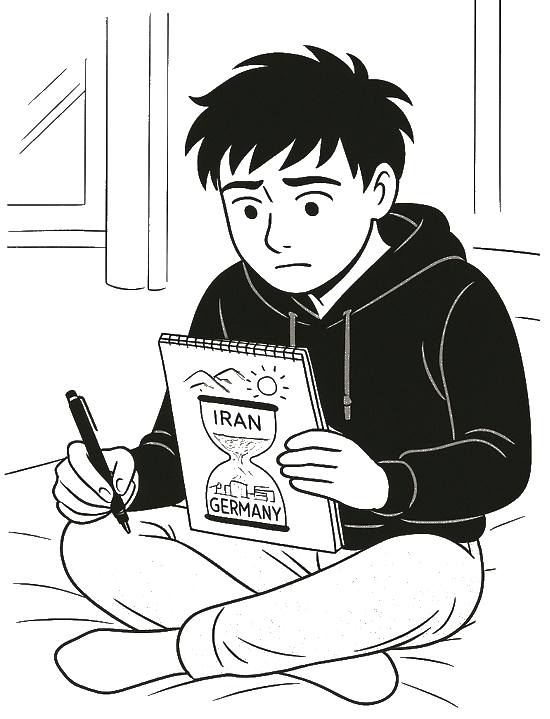
What should he become? What could he become? What if his German never felt easy? What if no one wanted him as an apprentice, as a student, as anything? He sat up and grabbed his notebook.He drew a sandglass. In the upper half he wrote “Iran”. In the lower half he wrote “Germany”. In the middle, where the sand had to pass, he drew a small crack. Some grains fell through. Some stuck. Above the sandglass he drew mountains and sun – pieces of Iran.
Below he drew red-roofed houses and a bus stop – pieces of Germany. Next to it he added a small backpack. Underneath, in tiny letters, he wrote: It feels like some time got stuck.
He looked at the drawing for a long time. He didn’t feel dramatic or ashamed, just honest.
He tore out the page and slid it into his backpack.
Ramtin and the Panic About Tomorrow
That night, he couldn’t sleep. The questions about the future came back, harder this time.
What should he become? What could he become? What if his German never felt easy? What if no one wanted him as an apprentice, as a student, as anything? He sat up and grabbed his notebook.He drew a sandglass. In the upper half he wrote “Iran”. In the lower half he wrote “Germany”. In the middle, where the sand had to pass, he drew a small crack. Some grains fell through. Some stuck. Above the sandglass he drew mountains and sun – pieces of Iran.
Below he drew red-roofed houses and a bus stop – pieces of Germany. Next to it he added a small backpack. Underneath, in tiny letters, he wrote: It feels like some time got stuck.
He looked at the drawing for a long time. He didn’t feel dramatic or ashamed, just honest.
He tore out the page and slid it into his backpack.
Ramtin and the Panic About Tomorrow
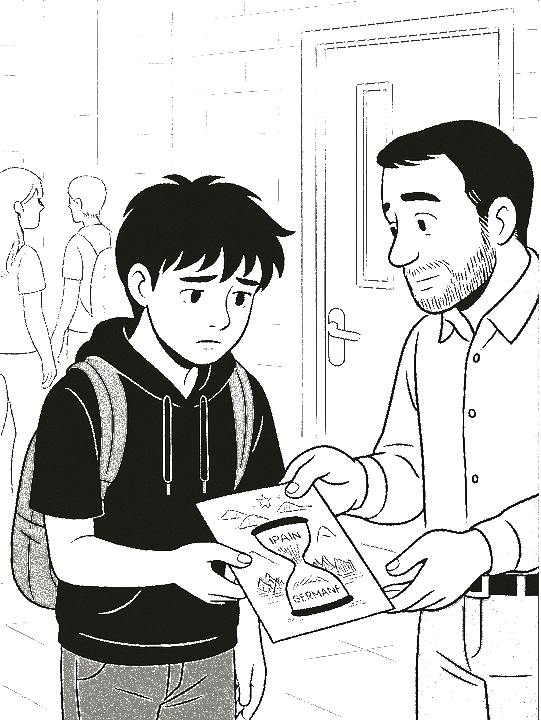
The page escaped the next day. In the crowded hallway, when he pulled out his math book, the paper slipped and fell to the floor. “Hey, you dropped something,” someone said.
It wasn’t a student. It was the school social worker, Mr. Yılmaz. He bent down and picked up the drawing carefully, without laughing.
“Did you draw this?” he asked.
Ramtin felt the heat crawl up his neck. He wanted to say no. But he nodded.
“It’s… just something I did at night,” he mumbled. “It’s very strong,” said Mr. Yılmaz, and his tone was soft, not mocking. “There’s a lot in it. Would you be okay if we talked about it sometime? Only if you want, of course.”
Something in his voice made the pressure in Ramtin’s chest loosen just a little. It was the way he said “if you want” and actually meant it.
After a moment, Ramtin said yes. They agreed to meet in the small counselling room the next day.
Ramtin and the Panic About Tomorrow
The page escaped the next day. In the crowded hallway, when he pulled out his math book, the paper slipped and fell to the floor. “Hey, you dropped something,” someone said.
It wasn’t a student. It was the school social worker, Mr. Yılmaz. He bent down and picked up the drawing carefully, without laughing.
“Did you draw this?” he asked.
Ramtin felt the heat crawl up his neck. He wanted to say no. But he nodded.
“It’s… just something I did at night,” he mumbled. “It’s very strong,” said Mr. Yılmaz, and his tone was soft, not mocking. “There’s a lot in it. Would you be okay if we talked about it sometime? Only if you want, of course.”
Something in his voice made the pressure in Ramtin’s chest loosen just a little. It was the way he said “if you want” and actually meant it.
After a moment, Ramtin said yes. They agreed to meet in the small counselling room the next day.
Ramtin and the Panic About Tomorrow
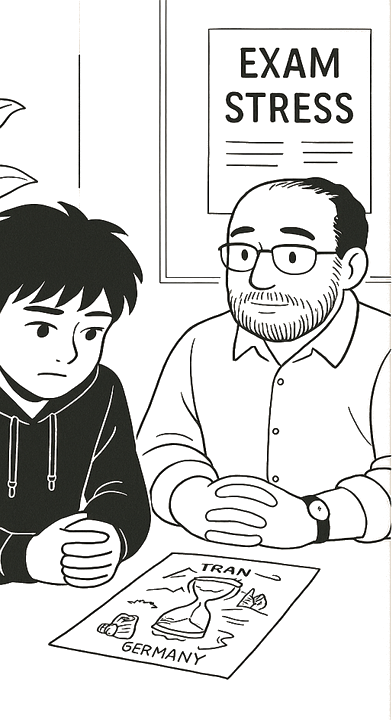
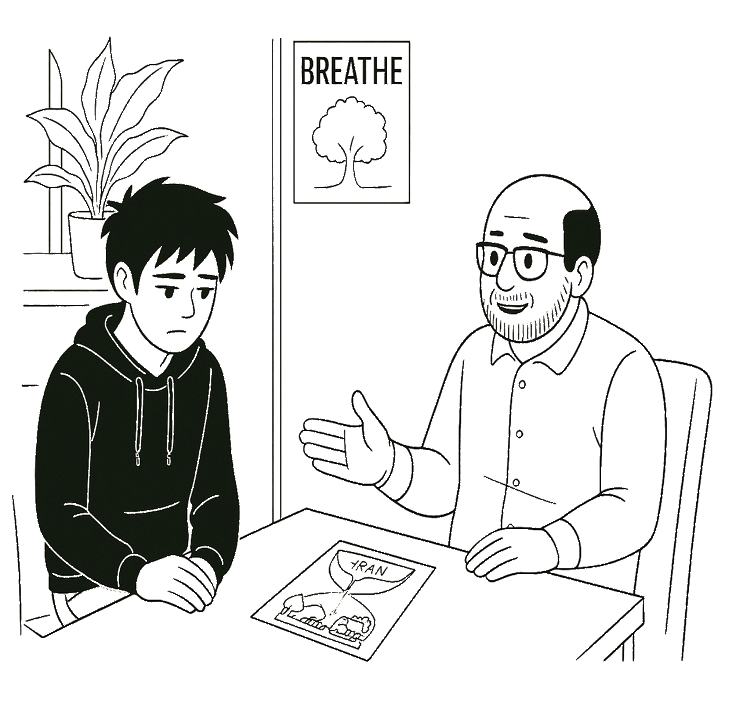
The room was warm and quiet. A plant stood on the windowsill. On the wall hung a poster about exam stress in three languages. The sandglass drawing lay on the table between them.
“It looks like you’re carrying a lot,” said Mr. Yılmaz gently. “Between two places. Between two times.”
Ramtin looked at the drawing. “It’s like… I lost years,” he said finally. “We left Iran, then I had to start everything again. New language. New school system. The others had already built something while I was just arriving. It feels like I’m always trying to catch up. Like time is running too fast for me.” He paused, then added in a quieter voice, “And if I don’t catch up, I’ll never have a real future.”
They sat in silence for a moment. “It makes sense that you feel this way,” said the social worker. “You moved countries. You changed languages. That’s a big thing for your brain and your heart.” He tapped the picture softly. “The crack in the middle… when you look at it, what kind of feeling do you get in your body?”
“Like pressure,” said Ramtin. “In my chest. And in my head. Like when everyone in the corridor talks about their future, and I just… freeze.”
“Do you ever get physical symptoms?” asked Mr. Yılmaz carefully. “Like a racing heart, dizziness, feeling like you can’t breathe?” Ramtin looked down at his hands. “A few times,” he said. “Mostly at night. Once I thought I was having a heart attack.”
Ramtin and the Panic About Tomorrow
The room was warm and quiet. A plant stood on the windowsill. On the wall hung a poster about exam stress in three languages. The sandglass drawing lay on the table between them.
“It looks like you’re carrying a lot,” said Mr. Yılmaz gently. “Between two places. Between two times.”
Ramtin looked at the drawing. “It’s like… I lost years,” he said finally. “We left Iran, then I had to start everything again. New language. New school system. The others had already built something while I was just arriving. It feels like I’m always trying to catch up. Like time is running too fast for me.” He paused, then added in a quieter voice, “And if I don’t catch up, I’ll never have a real future.”
They sat in silence for a moment. “It makes sense that you feel this way,” said the social worker. “You moved countries. You changed languages. That’s a big thing for your brain and your heart.” He tapped the picture softly. “The crack in the middle… when you look at it, what kind of feeling do you get in your body?”
“Like pressure,” said Ramtin. “In my chest. And in my head. Like when everyone in the corridor talks about their future, and I just… freeze.”
“Do you ever get physical symptoms?” asked Mr. Yılmaz carefully. “Like a racing heart, dizziness, feeling like you can’t breathe?” Ramtin looked down at his hands. “A few times,” he said. “Mostly at night. Once I thought I was having a heart attack.”
Ramtin and the Panic About Tomorrow
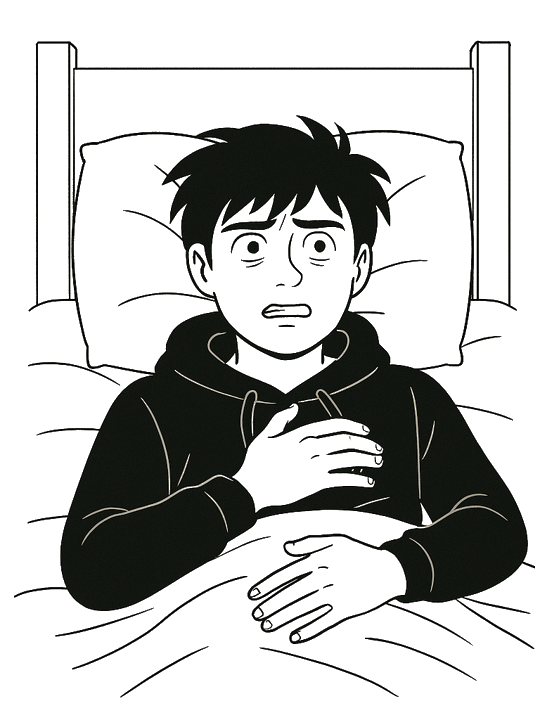
The first time had happened just a few days earlier. He lay in bed, staring at the dark ceiling. His thoughts about the future raced around and around: What if you fail? What if you never find a job? What if they regret coming here because of you? The questions sped up until his brain felt like it might explode.
Then his heart started hammering. His chest got tight. The air felt thin, as if someone had stolen the oxygen from the room. His fingers tingled. His face felt hot and cold at the same time. He sat up suddenly and grabbed his chest. I’m dying. I’m dying. Something is wrong with my heart. He tried to take a big breath, but it only made everything feel stranger. The room looked far away, like he was watching himself from outside his body. He didn’t call his parents. He didn’t want to scare them. After some minutes the feeling slowly weakened. His heart still beat fast, but his lungs started working again. When it was over, he was shaking and exhausted. Now he told this to Mr. Yılmaz in a low voice.
Ramtin and the Panic About Tomorrow
The first time had happened just a few days earlier. He lay in bed, staring at the dark ceiling. His thoughts about the future raced around and around: What if you fail? What if you never find a job? What if they regret coming here because of you? The questions sped up until his brain felt like it might explode.
Then his heart started hammering. His chest got tight. The air felt thin, as if someone had stolen the oxygen from the room. His fingers tingled. His face felt hot and cold at the same time. He sat up suddenly and grabbed his chest. I’m dying. I’m dying. Something is wrong with my heart. He tried to take a big breath, but it only made everything feel stranger. The room looked far away, like he was watching himself from outside his body. He didn’t call his parents. He didn’t want to scare them. After some minutes the feeling slowly weakened. His heart still beat fast, but his lungs started working again. When it was over, he was shaking and exhausted. Now he told this to Mr. Yılmaz in a low voice.
Ramtin and the Panic About Tomorrow
“It sounds like you had a panic attack,” said the social worker gently. “Have you heard that word before?” “A little,” said Ramtin. “But it feels like… like something is really wrong with me. Like I might go crazy. Or die.” “That’s how panic attacks feel,” said Mr. Yılmaz.
“They are very scary. But the important thing to know is: a panic attack is your body’s alarm system switching on too strongly. It feels dangerous. But on its own, it is not dangerous. Your body is trying to protect you from something it thinks is a threat.” He leaned back.
“The good news is: you can learn things that help when this alarm goes off. Tools for your body and your senses. Would you like to try some?” Ramtin hesitated. Then he nodded. Anything was better than just waiting for the next panic wave to hit.“The good news is: you can learn things that help when this alarm goes off. Tools for your body and your senses. Would you like to try some?” Ramtin hesitated. Then he nodded. Anything was better than just waiting for the next panic wave to hit.
Ramtin and the Panic About Tomorrow
“It sounds like you had a panic attack,” said the social worker gently. “Have you heard that word before?” “A little,” said Ramtin. “But it feels like… like something is really wrong with me. Like I might go crazy. Or die.” “That’s how panic attacks feel,” said Mr. Yılmaz.
“They are very scary. But the important thing to know is: a panic attack is your body’s alarm system switching on too strongly. It feels dangerous. But on its own, it is not dangerous. Your body is trying to protect you from something it thinks is a threat.” He leaned back.
“The good news is: you can learn things that help when this alarm goes off. Tools for your body and your senses. Would you like to try some?” Ramtin hesitated. Then he nodded. Anything was better than just waiting for the next panic wave to hit.“The good news is: you can learn things that help when this alarm goes off. Tools for your body and your senses. Would you like to try some?” Ramtin hesitated. Then he nodded. Anything was better than just waiting for the next panic wave to hit.
Ramtin and the Panic About Tomorrow
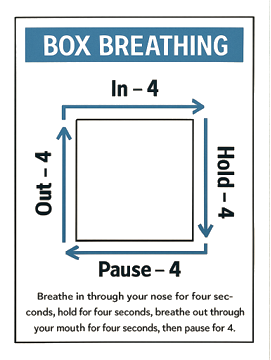
“Let’s start with your breathing,” said Mr. Yılmaz. He took a blank sheet of paper and drew a square. “We call this box breathing,” he explained. “Imagine you are walking slowly around this square with your breath.” On each side he wrote:
In – 4
Hold – 4
Out – 4
Pause – 4
“We breathe in through the nose for four seconds,” he said. “Then we hold for four. Then we breathe out slowly through the mouth for four. Then we rest for four. The counting helps your body get out of panic mode.” He placed the paper in front of Ramtin. “Let’s try it together, okay? I’ll count. Just do what you can.”
They began. “In… two, three, four. Hold… two, three, four. Out… two, three, four. Pause… two, three, four.” At first, Ramtin’s shoulders were up near his ears. His breath came rough and choppy. They repeated the square again and again. After a few rounds, his shoulders dropped a little. The air felt thicker, friendlier. “How does your body feel now?” asked Mr. Yılmaz. “A bit… heavier,” said Ramtin, surprised. “And my head is not so loud.” “This is something you can practise when you feel okay,” said the social worker. “So when panic comes, your body already knows the path.”
Ramtin and the Panic About Tomorrow
“Let’s start with your breathing,” said Mr. Yılmaz. He took a blank sheet of paper and drew a square. “We call this box breathing,” he explained. “Imagine you are walking slowly around this square with your breath.” On each side he wrote:
In – 4
Hold – 4
Out – 4
Pause – 4
“We breathe in through the nose for four seconds,” he said. “Then we hold for four. Then we breathe out slowly through the mouth for four. Then we rest for four. The counting helps your body get out of panic mode.” He placed the paper in front of Ramtin. “Let’s try it together, okay? I’ll count. Just do what you can.”
They began. “In… two, three, four. Hold… two, three, four. Out… two, three, four. Pause… two, three, four.” At first, Ramtin’s shoulders were up near his ears. His breath came rough and choppy. They repeated the square again and again. After a few rounds, his shoulders dropped a little. The air felt thicker, friendlier. “How does your body feel now?” asked Mr. Yılmaz. “A bit… heavier,” said Ramtin, surprised. “And my head is not so loud.” “This is something you can practise when you feel okay,” said the social worker. “So when panic comes, your body already knows the path.”
Ramtin and the Panic About Tomorrow
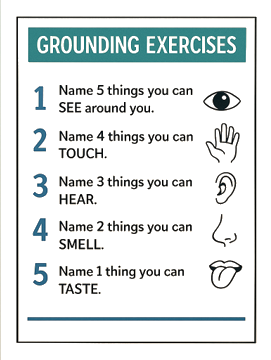
He continued “Sometimes thoughts run so fast that breathing alone is not enough. Then we can also use your five senses to come back into the present.” He wrote on another paper:
5 things you can see
4 things you can feel with your body
3 things you can hear
2 things you can smell
1 thing you can taste – or imagine tasting
“This is a grounding exercise,” he said. “When panic hits, your brain leaves the room and runs into scary future movies. This brings you back to the room.” He looked at Ramtin. “Do you want to try it once, just as practice?” Ramtin nodded. He looked around. “Five things I can see…” he began. “The window. The yellow folder. Your blue pen. The plant. My shoes.” “Good,” said Mr. Yılmaz. “Now four things you can feel.”
“The chair under me. My feet in my shoes. My hand on my jeans. The edge of the table.”
“Three sounds?” “Voices in the corridor. A door. The heater.” They continued until they reached one taste. Ramtin imagined the taste of sweet black tea on his tongue.
“Sometimes you can do this only in your mind,” said Mr. Yılmaz. “Sometimes you can whisper it quietly. It tells your brain: Right now I am here. In this room. I am safe enough in his moment.” Safe enough. It was not the same as completely safe. But it was more than nothing.
Ramtin and the Panic About Tomorrow
He continued “Sometimes thoughts run so fast that breathing alone is not enough. Then we can also use your five senses to come back into the present.” He wrote on another paper:
5 things you can see
4 things you can feel with your body
3 things you can hear
2 things you can smell
1 thing you can taste – or imagine tasting
“This is a grounding exercise,” he said. “When panic hits, your brain leaves the room and runs into scary future movies. This brings you back to the room.” He looked at Ramtin. “Do you want to try it once, just as practice?” Ramtin nodded. He looked around. “Five things I can see…” he began. “The window. The yellow folder. Your blue pen. The plant. My shoes.” “Good,” said Mr. Yılmaz. “Now four things you can feel.”
“The chair under me. My feet in my shoes. My hand on my jeans. The edge of the table.”
“Three sounds?” “Voices in the corridor. A door. The heater.” They continued until they reached one taste. Ramtin imagined the taste of sweet black tea on his tongue.
“Sometimes you can do this only in your mind,” said Mr. Yılmaz. “Sometimes you can whisper it quietly. It tells your brain: Right now I am here. In this room. I am safe enough in his moment.” Safe enough. It was not the same as completely safe. But it was more than nothing.
Ramtin and the Panic About Tomorrow
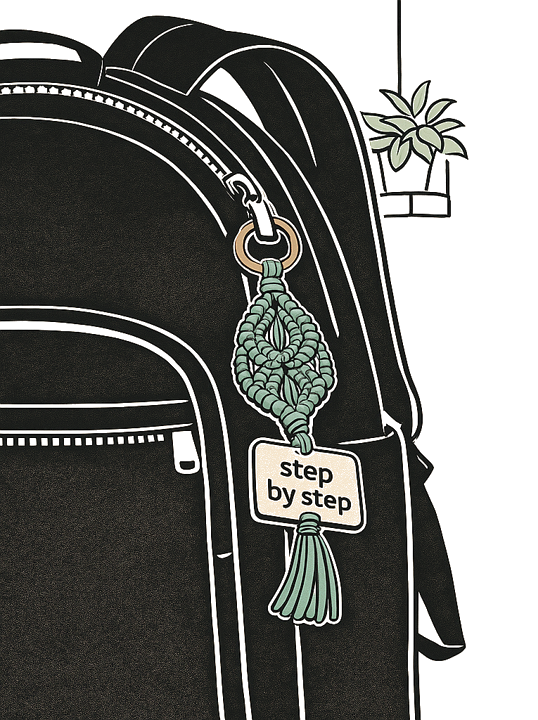
A few evenings later, Mama sat at the table with some leftover cotton thread. “What are you making?” he asked. “A small keychain,” she said. “Macramé. We used to do this when I was your age. Do you want to learn?” He sat down beside her. She showed him how to tie the knots, patient and calm. Over and under, pulling the threads, creating a simple but strong pattern. His fingers moved slowly at first, then more confidently. When the keychain was finished, Baba took a small metal plate from a drawer.
On one side, they engraved in Persian: قدم به قدم.
On the other side: Step by step.
“Why this?” Mama asked.
“Because sometimes I want to jump to all the answers about my future at once,” said Ramtin. “And then I panic. I want something to remind me that I only need the next small step.” He clipped the finished keychain to his school bag. The threads were rough and soft at the same time. The metal plate felt cool against his skin when he held it.For the first time, he felt like he carried not only fear with him, but also something that could help.
Ramtin and the Panic About Tomorrow
A few evenings later, Mama sat at the table with some leftover cotton thread. “What are you making?” he asked. “A small keychain,” she said. “Macramé. We used to do this when I was your age. Do you want to learn?” He sat down beside her. She showed him how to tie the knots, patient and calm. Over and under, pulling the threads, creating a simple but strong pattern. His fingers moved slowly at first, then more confidently. When the keychain was finished, Baba took a small metal plate from a drawer.
On one side, they engraved in Persian: قدم به قدم.
On the other side: Step by step.
“Why this?” Mama asked.
“Because sometimes I want to jump to all the answers about my future at once,” said Ramtin. “And then I panic. I want something to remind me that I only need the next small step.” He clipped the finished keychain to his school bag. The threads were rough and soft at the same time. The metal plate felt cool against his skin when he held it.For the first time, he felt like he carried not only fear with him, but also something that could help.
Ramtin and the Panic About Tomorrow
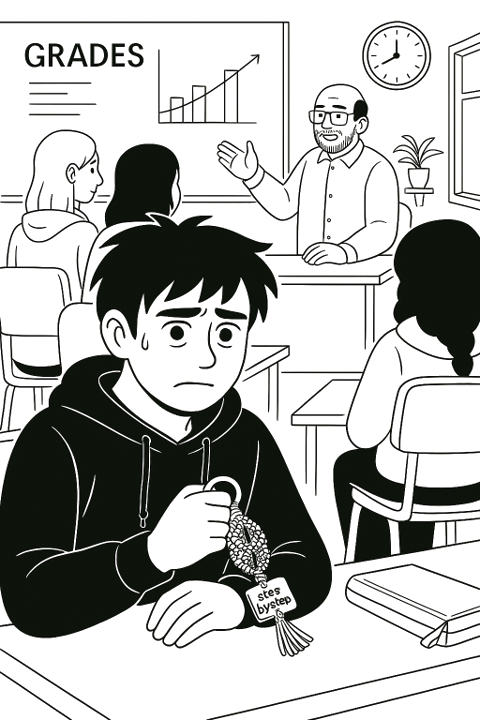
First time he really needed it was a few weeks later. The class was talking about exams and final grades. Someone asked the teacher how many points they needed to get into certain schools. The teacher started drawing charts on the board, talking about averages, applications, competition. Here it comes, thought Ramtin. His heart began to beat harder. His chest got tight. The familiar spinning started in his head: What if I fail, what if I fail, what if I fail. His vision narrowed. The sounds in the room turned distant and strange. Almost by reflex, his hand reached for his bag. His fingers found the macramé keychain. He wrapped his hand around it, feeling the knots press into his skin. Rough. Real. Here, he told himself.
He remembered the square. In – two, three, four. Hold – two, three, four. Out – two, three, four. Pause – two, three, four. He followed the imaginary box with his breath. Then he started the grounding exercise in his mind. Five things I can see: the whiteboard, Sara’s green hoodie, the clock, the window, his pencil case.Four things I can feel: the chair under his legs, his feet in his shoes, the keychain in his hand, the wooden edge of the table. Three things I can hear: pens scratching, the teacher’s voice, a car outside.
The wave of panic was still there—but it didn’t drown him this time.
It moved past him like a strong wind instead of pulling him under like deep water.
No one in the classroom seemed to notice anything. The teacher kept talking about grades. Someone made a joke. A few students laughed.
Ramtin’s heart was still beating fast, but he could understand the words again.
It works, he thought, amazed. The panic is here. But I am here too.
Ramtin and the Panic About Tomorrow
First time he really needed it was a few weeks later. The class was talking about exams and final grades. Someone asked the teacher how many points they needed to get into certain schools. The teacher started drawing charts on the board, talking about averages, applications, competition. Here it comes, thought Ramtin. His heart began to beat harder. His chest got tight. The familiar spinning started in his head: What if I fail, what if I fail, what if I fail. His vision narrowed. The sounds in the room turned distant and strange. Almost by reflex, his hand reached for his bag. His fingers found the macramé keychain. He wrapped his hand around it, feeling the knots press into his skin. Rough. Real. Here, he told himself.
He remembered the square. In – two, three, four. Hold – two, three, four. Out – two, three, four. Pause – two, three, four. He followed the imaginary box with his breath. Then he started the grounding exercise in his mind. Five things I can see: the whiteboard, Sara’s green hoodie, the clock, the window, his pencil case.Four things I can feel: the chair under his legs, his feet in his shoes, the keychain in his hand, the wooden edge of the table. Three things I can hear: pens scratching, the teacher’s voice, a car outside.
The wave of panic was still there—but it didn’t drown him this time. It moved past him like a strong wind instead of pulling him under like deep water.
No one in the classroom seemed to notice anything. The teacher kept talking about grades. Someone made a joke. A few students laughed. Ramtin’s heart was still beating fast, but he could understand the words again. It works, he thought, amazed. The panic is here. But I am here too.
Ramtin and the Panic About Tomorrow
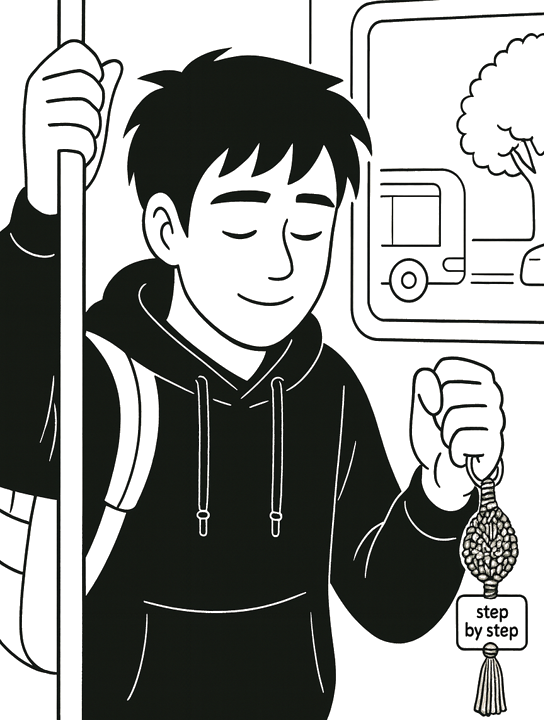
Weeks later, his next German presentation was coming up. The old fear visited him that morning, like an unwanted guest. On the bus to school, his stomach felt like it was full of stones. His hands were cold. His mind tried to run away into disaster stories: You’ll forget everything. They’ll laugh. The teacher will think you’re lazy. You’ll never—
He took the macramé keychain out of his pocket and held it tightly.
He followed the box with his breath: in, hold, out, pause.
He looked out the window and named five things he could see: a dog walker, a traffic light, a bakery, a cyclist, a tree.
The stones in his stomach didn’t disappear, but they became a bit smaller. In front of the class, he still shook. He forgot one sentence and had to look down at his notes. His voice broke once. But he didn’t run away. He didn’t stop. When he finished, Ali gave him a thumbs up. The teacher smiled and wrote “well structured – good argument” on his paper.
Ramtin and the Panic About Tomorrow
Weeks later, his next German presentation was coming up. The old fear visited him that morning, like an unwanted guest. On the bus to school, his stomach felt like it was full of stones. His hands were cold. His mind tried to run away into disaster stories: You’ll forget everything. They’ll laugh. The teacher will think you’re lazy. You’ll never—
He took the macramé keychain out of his pocket and held it tightly.
He followed the box with his breath: in, hold, out, pause.
He looked out the window and named five things he could see: a dog walker, a traffic light, a bakery, a cyclist, a tree.
The stones in his stomach didn’t disappear, but they became a bit smaller. In front of the class, he still shook. He forgot one sentence and had to look down at his notes. His voice broke once. But he didn’t run away. He didn’t stop. When he finished, Ali gave him a thumbs up. The teacher smiled and wrote “well structured – good argument” on his paper.
Ramtin and the Panic About Tomorrow
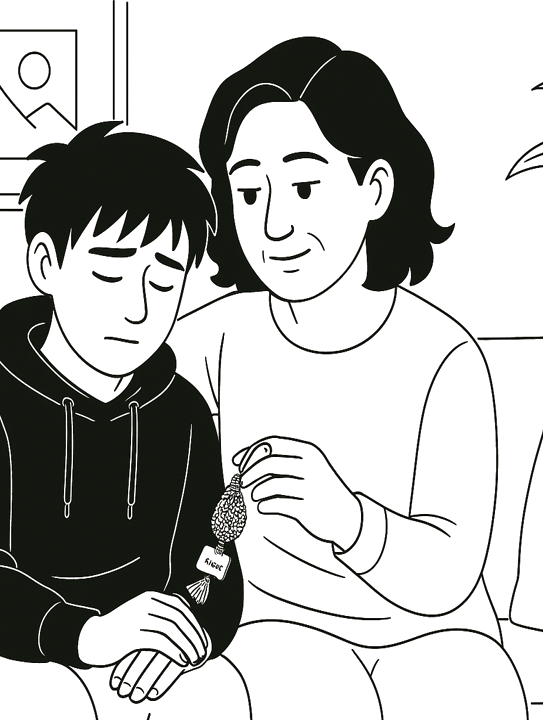
At home, he finally told Mama about the panic, the breathing, the grounding, the keychain. She listened carefully, then took a deep breath of her own.
“When I was your age,” she said quietly, “my heart also raced sometimes. I didn’t know what it was. I thought I was weak. No one explained panic to me back then.” She touched the keychain. “I’m glad you are learning these tools now,” she said. “You are not weak. Your body is just loud sometimes.”
For the first time, Ramtin didn’t feel broken because of his fear. He felt… brave. Not because he had no fear, but because he was learning how to meet it.
Step by step.
Ramtin and the Panic About Tomorrow
At home, he finally told Mama about the panic, the breathing, the grounding, the keychain. She listened carefully, then took a deep breath of her own.
“When I was your age,” she said quietly, “my heart also raced sometimes. I didn’t know what it was. I thought I was weak. No one explained panic to me back then.” She touched the keychain. “I’m glad you are learning these tools now,” she said. “You are not weak. Your body is just loud sometimes.”
For the first time, Ramtin didn’t feel broken because of his fear. He felt… brave. Not because he had no fear, but because he was learning how to meet it.
Step by step.
Ramtin and the Panic About Tomorrow
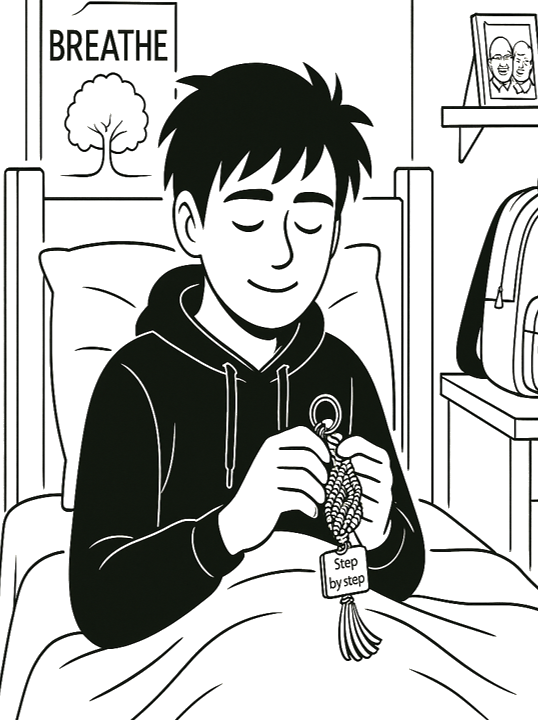
Sometimes the fear still came back. On some evenings, the future still felt too big. He would lie in bed and feel the questions wanting to spin again. What if… what if… what if…
On those days, he reached for his macramé keychain. He felt the knots between his fingers, the cool metal of the small plate. He followed the square in his mind with his breath. He slowly looked around his room and noticed what was actually there: his poster on the wall, his worn-out sneakers, his school bag, the photo of his grandparents on the shelf. He named what he could see, feel, hear. Then, in a voice so quiet that nobody else could hear, he whispered to himself:
“Step by step.”
He reminded himself that he didn’t have to know his whole future tonight. He didn’t need to decide all at once what he wanted to be in thirty years. He only needed the next small step.
One homework.
One question to a teacher.
One conversation with the social worker.
One breath.
Every time he did that, the fear became a little less loud. He still didn’t have all the answers. But he had something else now: A way to walk with his fear instead of being chased by it. And somehow, that already felt like the beginning of a future he could trust.
Ramtin and the Panic About Tomorrow
Sometimes the fear still came back. On some evenings, the future still felt too big. He would lie in bed and feel the questions wanting to spin again. What if… what if… what if…
On those days, he reached for his macramé keychain. He felt the knots between his fingers, the cool metal of the small plate. He followed the square in his mind with his breath. He slowly looked around his room and noticed what was actually there: his poster on the wall, his worn-out sneakers, his school bag, the photo of his grandparents on the shelf. He named what he could see, feel, hear. Then, in a voice so quiet that nobody else could hear, he whispered to himself:
“Step by step.”
He reminded himself that he didn’t have to know his whole future tonight. He didn’t need to decide all at once what he wanted to be in thirty years. He only needed the next small step.
One homework.
One question to a teacher.
One conversation with the social worker.
One breath.
Every time he did that, the fear became a little less loud. He still didn’t have all the answers. But he had something else now: A way to walk with his fear instead of being chased by it. And somehow, that already felt like the beginning of a future he could trust.